Vietnamese Medical Terms: How to Talk About Illness Like a Local
At a clinic in Vietnam you will hear cảm lạnh, sốt, and uống thuốc, not a translated medical textbook. Here are the words from Langiri's health videos, and the sentences that go with them.
Based on videos with Ngọc, Tâm, Hoàng Trâm, and Ngân. Start with Tâm's Body Reactions, then Ngọc's How is Your Health?, and Hoàng Trâm's Northern clinic skits in Dr. Trâm's Clinic. Several of the clinic and symptom lessons are free.
1. Tâm's ten symptoms
Tâm's first Body Reactions video is a repeat-after-me drill: ten words for what your body is doing when you feel off. In later videos, people put Tôi bị… or Southern Tui bị… in front of the same words.
 Đau đầu
- Headache. Tâm has you say it on its own, then 'đau đầu quá.'
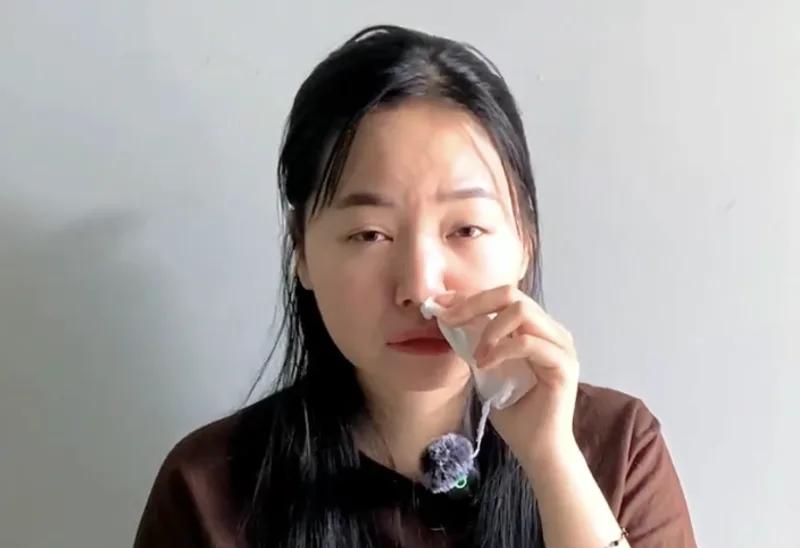 Sổ mũi
- Runny nose.
 Ho
Ho- Cough. Noun or verb: the word is just ho.
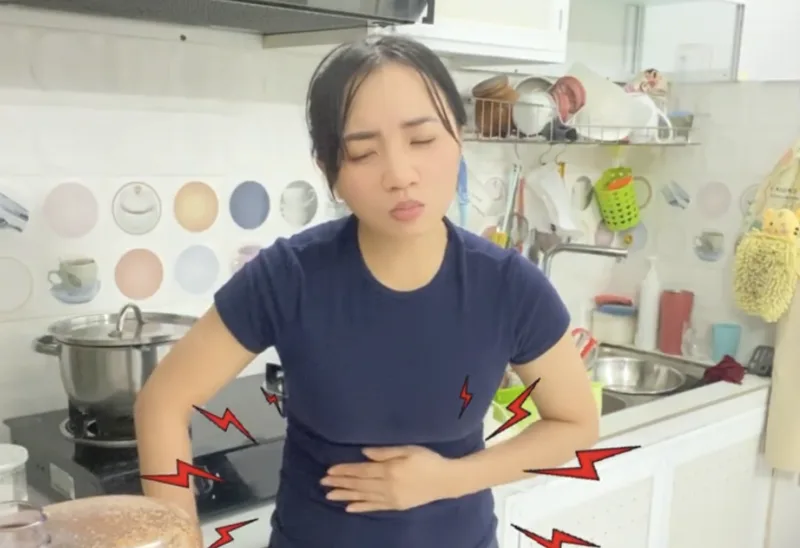 Đau bụng
- Stomachache. This one comes back immediately in the pharmacy roleplay.
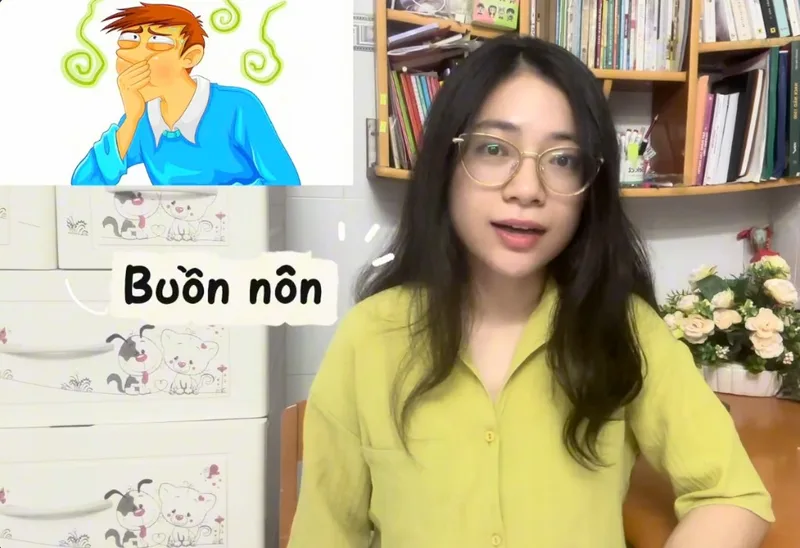 Buồn nôn
- Nausea / feeling like throwing up.
 Ngứa
Ngứa- Itchy. In the pharmacy video it becomes 'ngứa hết cả người' (itchy all over).
 Hắt xì
- Sneeze. Tâm uses hắt xì here. Ngọc says hắt hơi in the allergy lesson. Both are fine.
 Chóng mặt
- Dizzy / lightheaded. In Why Am I Dizzy? Tâm says 'chóng mặt quá' and 'tại sao tui bị chóng mặt.'
 Đau lưng
- Back pain.
 Run tay
- Shaking hands.
2. Colds, coughs, and fever
Ngọc's common cold lesson is the simple explainer. Her At the Clinic video is the full doctor visit: Lan has a headache and fever, coughs mostly at night, and has a little sore throat. The doctor calls it cảm lạnh and tells her to drink water, sleep, eat enough, and rest if she still has a fever.
Ngân has two short Southern stories around the same vocabulary: catching a cold and making orange juice (nước cam), and a hot-day fever that keeps her from going out. Dr. Trâm's cough episode is a clinic skit about a cough that will not go away, and a habit that is making it worse.
- Cảm lạnh / Bị cảm
- A cold. Cảm lạnh is what Ngọc's doctor says in At the Clinic. Ngân's kitchen video uses bị cảm.
 Sốt
Sốt- Fever. Lan tells the doctor 'Tôi bị đau đầu và sốt.' In Ngân's fever story, the thermometer reads 40 degrees.
 Đau họng
- Sore throat. The doctor asks this right after asking about cough.
Bạn có đau họng không?
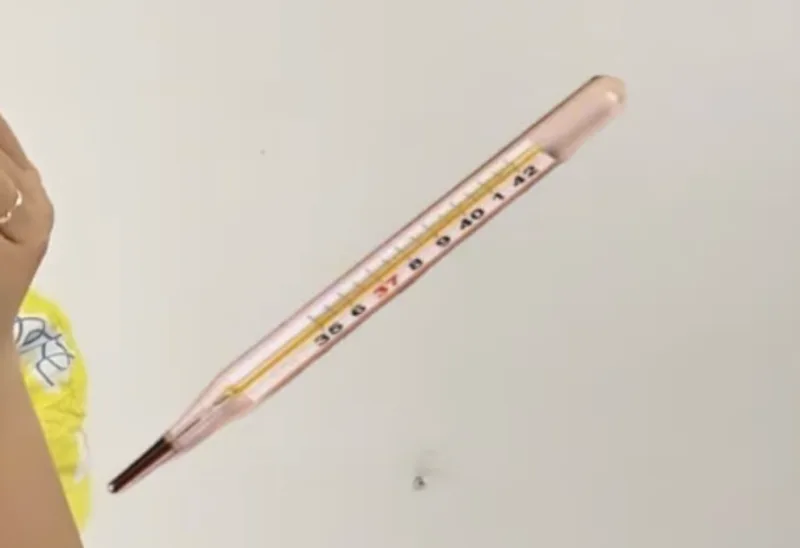 Nhiệt kế
- Thermometer. Ngân uses one in both of her cold/fever stories.
- Uống thuốc
- To take medicine, literally 'drink medicine.' Pills in Ngân's cold video are viên thuốc.
Tôi có cần uống thuốc không?
- Chúc bạn mau khỏe
- Get well soon. Ngọc's doctor says this. Tâm's pharmacist says 'Chúc bạn nhiều sức khỏe' instead.
3. Stomach pain and "lạnh bụng"
Tâm's pharmacy roleplay is where lạnh bụng shows up: a "cold stomach" blamed on ốc, iced drinks, and sour mango. The customer says Tui bị đau bụng after eating crab, shrimp, mango, and soda. Dr. Trâm's overeating episode is the same territory with a punchline. Lan thinks something is seriously wrong. Yesterday she had two milk teas, xiên que, spicy noodles, and ice cream.
Ngọc also has a slower explainer on stomach pain in How is Your Health?.
- Đau bụng
- Stomachache. Southern pharmacy version: 'Tui bị đau bụng.'
- Lạnh bụng
- 'Cold stomach.' Tâm's pharmacist: 'Ăn nhiều ốc dễ bị lạnh bụng.'
- Đau âm ỉ
- A dull, lingering ache. That is how Lan describes it to Dr. Trâm.
- Buồn nôn
- Nausea. Lan also says she is tired (mệt).
- Thuốc đau bụng
- Stomachache medicine. Lan already took some before she walked into the clinic.
- Ăn nhẹ lại
- Eat light again. Dr. Trâm's advice: drink water, rest, and skip spicy or cold food for a while.
4. Headaches, stress, insomnia, and exhaustion
Ngọc's headache lesson (Southern) adds mất ngủ, chóng mặt, and mệt mỏi on top of đau đầu. Dr. Trâm then plays two Northern clinic visits. In the sleep episode, the patient gets into bed at 11 and looks at her phone for two hours. She bought sleeping pills herself. Dr. Trâm's line is blunt: she is not sick, she is sleeping the wrong way.
In the exhaustion episode, Lan feels wiped out without doing anything: too much rest, scrolling, and energy drinks.
- Mất ngủ
- Insomnia / can't sleep. The patient says 'Em không ngủ được.'
 Mệt / Mệt mỏi
- Tired / worn out. Mệt is the everyday word. Ngọc's headache lesson also uses mệt mỏi.
- Không tập trung được
- I can't concentrate. She has been sleeping two or three hours a night.
- Căng thẳng
- Stressed / tense. Tâm also uses this as a reason your eye might twitch in the eye-twitching lesson.
- Thuốc ngủ
- Sleeping pills. Dr. Trâm asks whether a doctor prescribed them. The answer is no.
- Tắt điện thoại trước khi ngủ
- Turn off the phone before sleeping. Also: no coffee at night, drink water, go to bed on time.
5. Allergies
Ngọc defines dị ứng as the body reacting to something it does not like: dust, pollen, or food such as shrimp, crab, or peanuts. Symptoms she names first are itchy skin and a red rash. Tâm's second pharmacy customer has the seafood version: she ate crab and shrimp, knows she is allergic, and is itchy all over. If it gets bad, Ngọc says you may feel khó thở and should đi khám bác sĩ ngay.
- Dị ứng
- Allergy / to be allergic. 'Tôi bị dị ứng.' Tâm's pharmacist guesses hải sản.
- Ngứa da / Nổi mẩn đỏ
- Itchy skin / red rash. Ngọc's first two symptoms.
- Khó thở
- Short of breath. Ngọc's sign that this is no longer a mild reaction.
- Bụi, phấn hoa, đậu phộng
- Dust, pollen, peanuts. She also lists tôm and cua.
6. Back and neck pain
Ngọc's back-and-neck lesson is about sitting at a computer too long, or sitting with bad posture (sai tư thế). A sore back makes it hard to bend down or stand for a long time. A stiff neck means you cannot turn your head left or right. Some people also get shoulder pain or numb hands.
- Đau lưng / Đau cổ
- Back pain / neck pain.
Hôm nay lưng tôi rất mỏi.
- Cổ bị cứng
- Stiff neck.
Tôi không thể quay đầu dễ dàng.
- Sai tư thế
- Bad posture. Ngọc's usual cause: hours in front of a computer.
- Tê tay
- Numb or tingling hands. She mentions this with đau vai (shoulder pain).
7. Booking a hospital appointment
In Ngọc's Making a Hospital Appointment video, the clinic picks up with Phòng khám xin nghe. She says Tôi muốn đặt lịch khám. They ask which specialty. She wants a general checkup: khám tổng quát. First time there.
They take her name, then ask which day and whether she wants morning or afternoon. Friday afternoon. 2 giờ chiều is still open; she is busy then. 3 giờ chiều works. The staff reads it back: chị Ngọc, 3 giờ chiều thứ Sáu, and asks her to come about 15 minutes early to fill in personal information. Bring căn cước or a passport. She has no bảo hiểm y tế. The exam is about 300 nghìn đồng.
- Tôi muốn đặt lịch khám
- I want to book an appointment. The clinic answers 'Phòng khám xin nghe.'
Chị muốn khám chuyên khoa nào?
- Khám tổng quát
- A general checkup. The staff asks which specialty she wants.
- Buổi sáng hay buổi chiều?
- Morning or afternoon? Ngọc wants Friday afternoon.
Tôi muốn khám vào thứ Sáu.
- Đến sớm khoảng 15 phút
- Come about 15 minutes early to fill in personal information.
Chị sẽ điền thông tin cá nhân trước khi khám.
- Căn cước hoặc hộ chiếu
- ID card or passport. Ngọc asks what to bring.
Tôi cần mang theo gì không?
- Chi phí khám khoảng bao nhiêu?
- About how much is the exam? The staff says khoảng 300 nghìn đồng. Ngọc has no bảo hiểm y tế.
8. At the clinic and the pharmacy
Ngọc's At the Clinic video is a full visit, start to finish. Tâm's pharmacy roleplay is Southern and a little comic, with prices in đồng. Dr. Trâm's series is Northern and more of a sketch show, but the questions stay familiar: what hurts, since when, what did you eat, and what have you already taken?
- Chào bác sĩ
- Hello, doctor.
- Hôm nay bạn đến khám vì vấn đề gì?
- What are you here to be seen for today? The doctor's first question in Ngọc's clinic video.
- Bạn bị từ khi nào?
- Since when? Lan answers 'Từ hôm qua' in At the Clinic. Dr. Trâm's patient in the sleep episode says '3 ngày rồi.'
- Quý khách cần gì?
- What do you need? Tâm as the pharmacist in the pharmacy roleplay.
- Uống một ngày hai lần
- Take it twice a day, morning and afternoon. Tâm's dosing line.
buổi sáng và buổi chiều
- Hết bao nhiêu tiền?
- How much is it? Then 'Tiền đây' as you pay. One visit is 20.000, the other 15.000.
9. Hospital words with Ngọc
After the clinic visit, Ngọc has a slower hospital-vocabulary lesson: doctor, nurse, patient, syringe, mask, wheelchair, and emergency room. Each word comes with a short sentence about the scene. She says she is afraid of needles, and that she usually wears a mask when she goes out. There is a review at the end. Watch her hold each one up and listen for the Vietnamese.
10. What's in a first aid kit
If you want object names more than symptoms, Tâm unpacks a first aid kit in her What's in My Bag? series. The lesson list is scissors, cotton balls, rubbing alcohol, antiseptic, bandages, medical tape, a hot/cold pack, fever medicine, allergy medicine, diarrhea medicine, and adhesive bandages. Watch her hold each item up and listen for the Vietnamese.
11. Goosebumps, twitching eyes, hiccups, dizziness
Tâm's later Body Reactions episodes stay with everyday body words, plus a little folklore. In Why Am I Dizzy? she stands up too fast, says chóng mặt quá, and asks tại sao tui bị chóng mặt. She figures it out: não không đủ máu. After that she stands up chậm chậm.
 Nổi da gà
- Goosebumps. Tâm's reasons: cold, fear (sợ), a horror movie, or a song that gives you chills.
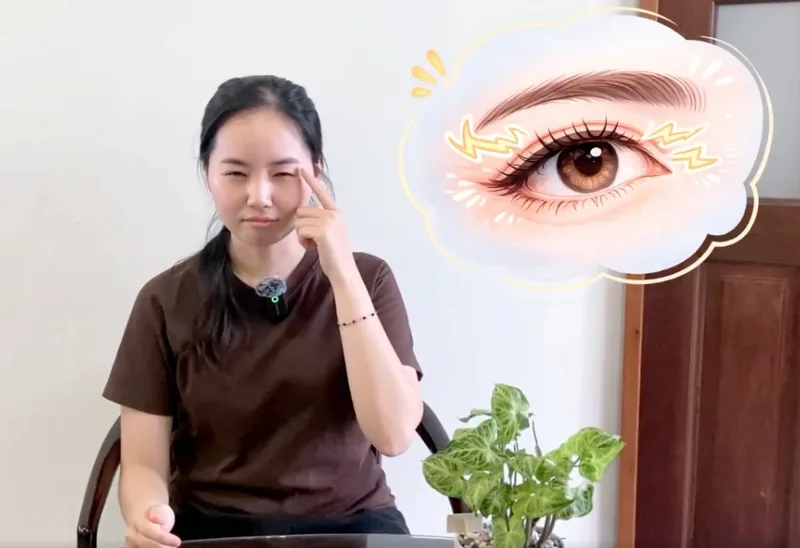 Mắt giật
- Eye twitching. Vietnamese people often joke that a left-eye twitch is lucky and a right-eye twitch is unlucky. Tâm's science version: tired, stressed, too much coffee.
- Nấc cụt
- Hiccups. Eat too fast or drink soda (nước có ga). Tâm's fixes: drink water, hold your breath, or startle yourself (giật mình).
- Cơ hoành
- Diaphragm. The body-part word she uses to explain why hiccups happen.
- Đứng dậy quá nhanh
- Standing up too quickly. That is when Tâm gets dizzy.
- Não không đủ máu
- The brain does not get enough blood. She also says não thiếu oxy.
- Đứng lên chậm chậm
- Stand up slowly. Her other line: không đứng nhanh.
Key takeaways
- Lead with bị. Tôi bị sốt. Tui bị đau bụng. Tôi bị dị ứng.
- Tôi muốn đặt lịch khám. They ask chuyên khoa, the day, and buổi sáng hay buổi chiều, then read the time back.
- Say what hurts, then since when. Từ hôm qua. Ba ngày rồi.
- Some of the "medical" talk is cultural. Lạnh bụng, sai tư thế, and Dr. Trâm's "Bạn không bị bệnh, bạn chỉ ngủ sai cách thôi."
- Medicine is drunk: uống thuốc. Dosing in Tâm's pharmacy: một ngày hai lần.
- Southern and Northern both show up. Tâm, Ngọc, and Ngân are Southern. Hoàng Trâm is Northern. The core symptom words are shared.
Ready to practice?
Common questions
How do you say "I am sick" in Vietnamese?
Name the problem with "bị": "Tôi bị cảm lạnh" (I have a cold), "Tôi bị sốt" (I have a fever), "Tôi bị đau đầu" (I have a headache). Ngọc also uses "bị ốm" for being sick. You do not need a long explanation.
How do you describe symptoms to a doctor in Vietnamese?
Start with "Chào bác sĩ." In Ngọc's clinic dialogue, the doctor asks "Hôm nay bạn đến khám vì vấn đề gì?" and Lan answers "Tôi bị đau đầu và sốt." Next come "Bạn bị từ khi nào?" (Since when?), "Bạn có ho không?" (Do you have a cough?), and "Bạn có đau họng không?" (Do you have a sore throat?). Useful replies: "Từ hôm qua" and "Có, tôi ho khá nhiều."
What does "lạnh bụng" mean in Vietnamese?
"Lạnh bụng" literally means "cold stomach." In Tâm's pharmacy roleplay, the pharmacist blames iced drinks, ốc (snails), and sour mango for stomach pain. It is everyday health talk, not a textbook diagnosis.
How do you say headache, cough, and fever in Vietnamese?
"Đau đầu" is headache, "ho" is cough, and "sốt" is fever. Other common symptoms in Langiri's health videos include "sổ mũi" (runny nose), "đau họng" (sore throat), "đau bụng" (stomachache), "buồn nôn" (nausea), "chóng mặt" (dizzy), and "mệt" or "mệt mỏi" (tired). Put "Tôi bị…" in front to say what you have.
How do you book a hospital appointment in Vietnamese?
On the phone, Ngọc says "Tôi muốn đặt lịch khám." The clinic answers "Phòng khám xin nghe," then asks which specialty, whether you have been there before, your name, which day, and morning or afternoon. In the video she books a general checkup (khám tổng quát) on Friday at 3pm, arrives 15 minutes early to fill in personal information, and brings căn cước or a passport. She has no bảo hiểm y tế. The exam is about 300 nghìn đồng.